


AI speeds up development, and online store owners now face new decisions: when custom software pays off, what AI can handle and where to put the budget. Our experience shows that the biggest gains often lie outside the online store itself, in how efficiently the whole company runs.
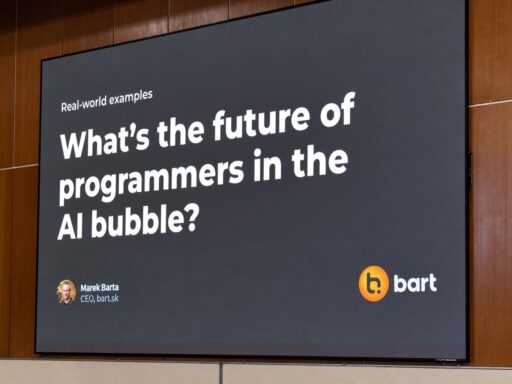
At the E-commerce Slovakia conference in Bratislava, I joined Vladimír Vanek of Riešenia.com and Ján Bučkuliak of CREATIVEsites for a panel on choosing and building e-commerce platforms in the age of AI. Each of us sees the topic from a different angle, and that is exactly what made the debate worth having. Here are three questions from the panel, along with my take and slides with examples from our own projects.
Will AI Make Agencies Cheaper?
At bart.sk, we have always believed that software should adapt to the business, not the other way around. Yet the cost of development often held custom solutions back. AI moves that line and makes custom software viable even where it made no economic sense just a few years ago.
At the same time, AI mainly shifts costs rather than cutting them. Routine coding takes less time, which frees up room for analysis, solution design, integrations, testing and new features. For a sense of the pace: with the help of AI, a three-person team built a booking system for the pharmacy chain Dr.Max in about three weeks.
In my experience, our clients are not primarily after cheaper solutions. They want better ones: more features, more automation and a stronger competitive edge. The real outcome of AI will be that companies get far more value for the same investment.
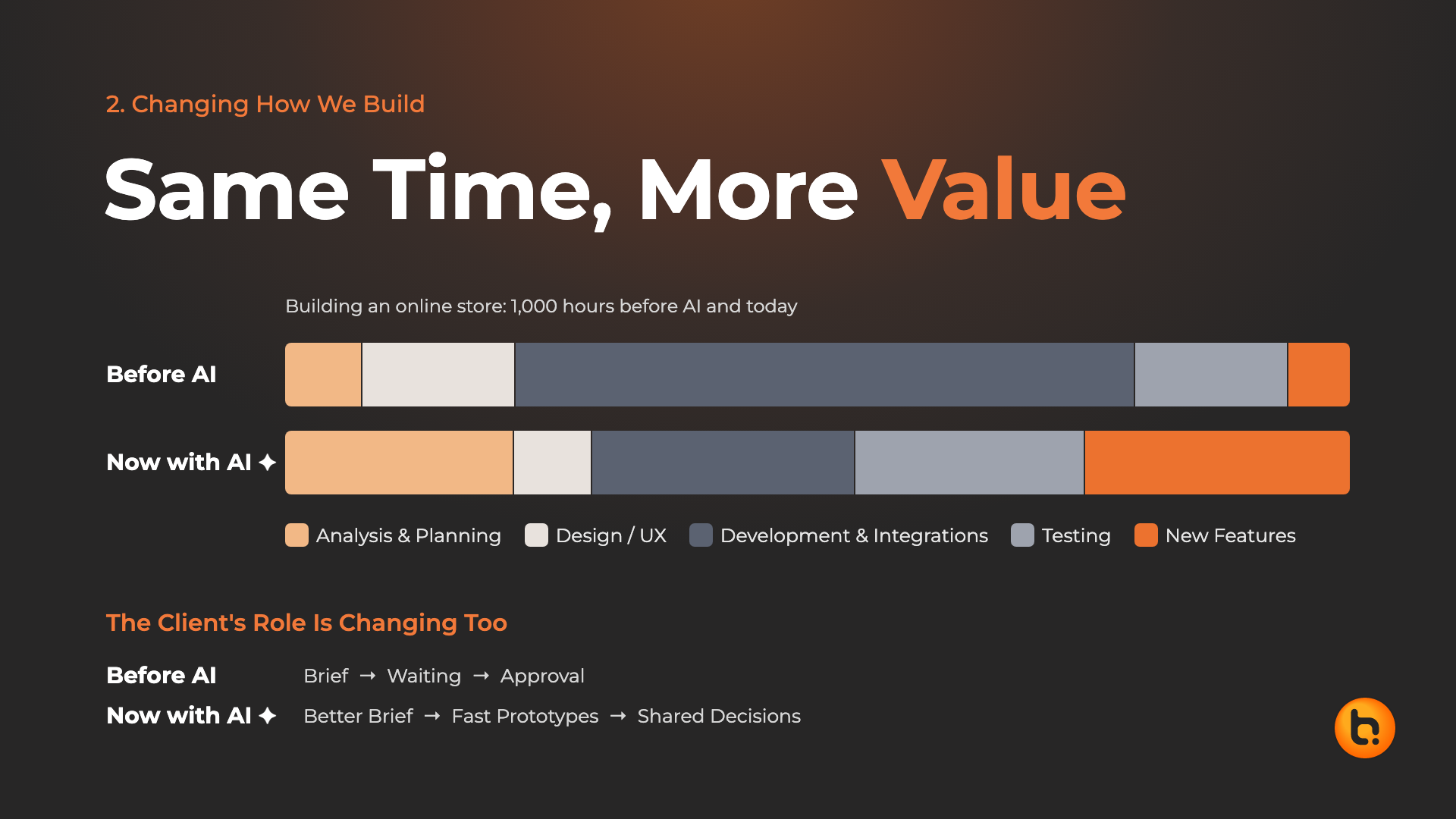
Working with clients is changing too. It used to be brief, wait, approve. Today the brief is stronger, we can show a prototype quickly and we shape the solution together. There is a flip side, though: AI will burn through a budget just as fast when it is spent inefficiently. That makes it all the more important to know what you are building and why, a point my colleague Laci also made in his blog on bringing AI into a company sensibly.
Can AI Build a Full-Fledged Online Store?
AI can build a growing share of software much faster and at a lower cost, and I believe this is exactly the direction development should take. Today, the limiting factor is the brief, as it always has been. On the technical side, it comes down to security, operations, long-term development and accountability for the result.
We help clients with the brief through chat.bart.sk, our AI assistant that turns ideas into development briefs, but only the client truly knows their needs and their customers. And because operations and ongoing development matter so much, we work as a long-term partner rather than a vendor who hands over an online store and walks away.
I also see a second effect: expectations of the online store itself are rising. Our clients want features they had never heard of two years ago. For the pet store Cobbyspet, for example, we built a solution where AI generates the store’s copy, images and banners from basic product data alone. Today the client also creates its own visuals with AI, such as a Halloween campaign. Our next step is visuals tailored to each visitor’s own pet.
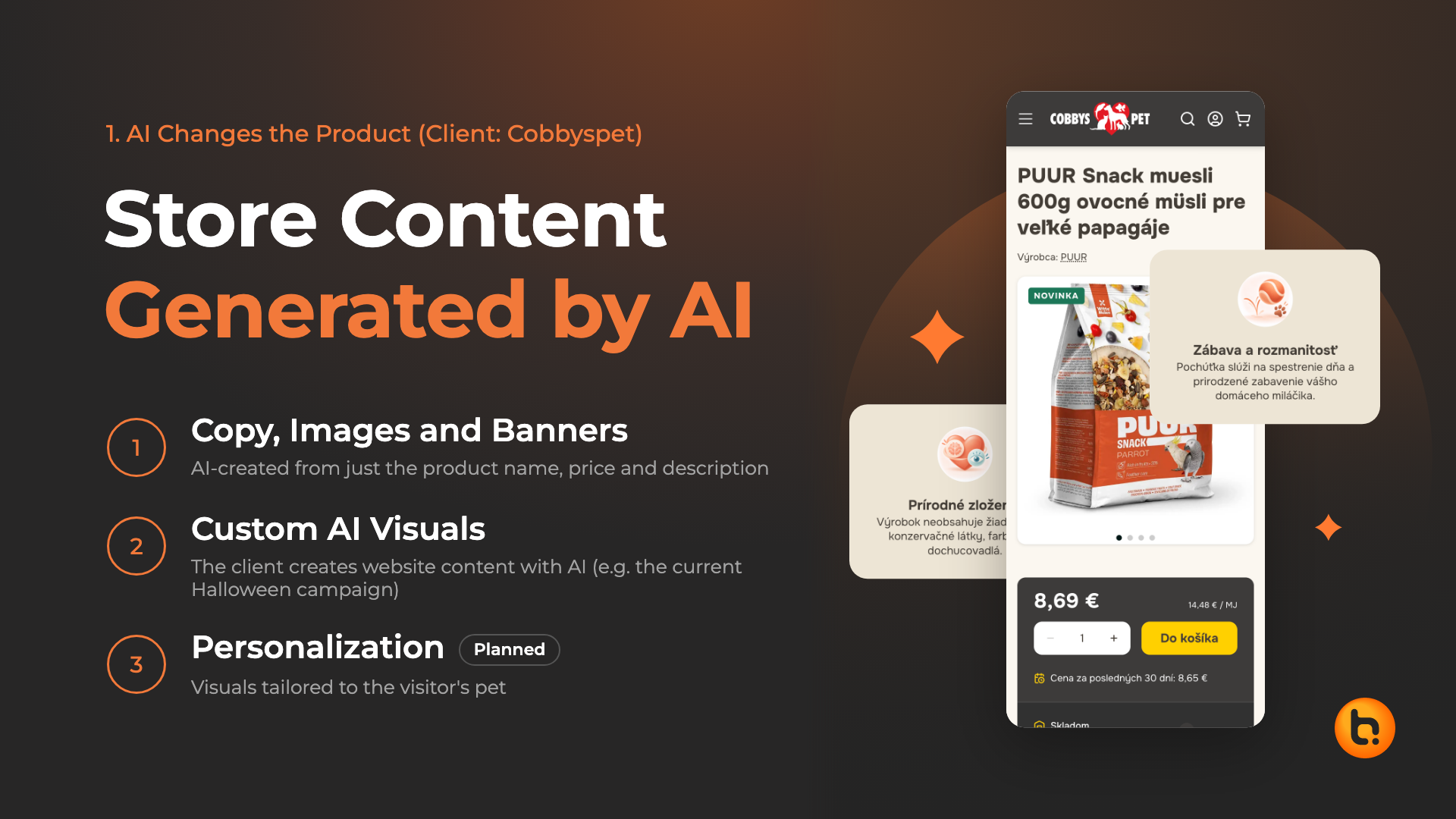
AI does more than deliver finished solutions. It also changes what we expect from software.
Where to Invest in 2027?
I would not automatically start with a redesign or a platform switch. First, I would want to understand where the company is losing money, where people spend time on repetitive manual work and where technology is holding back growth.
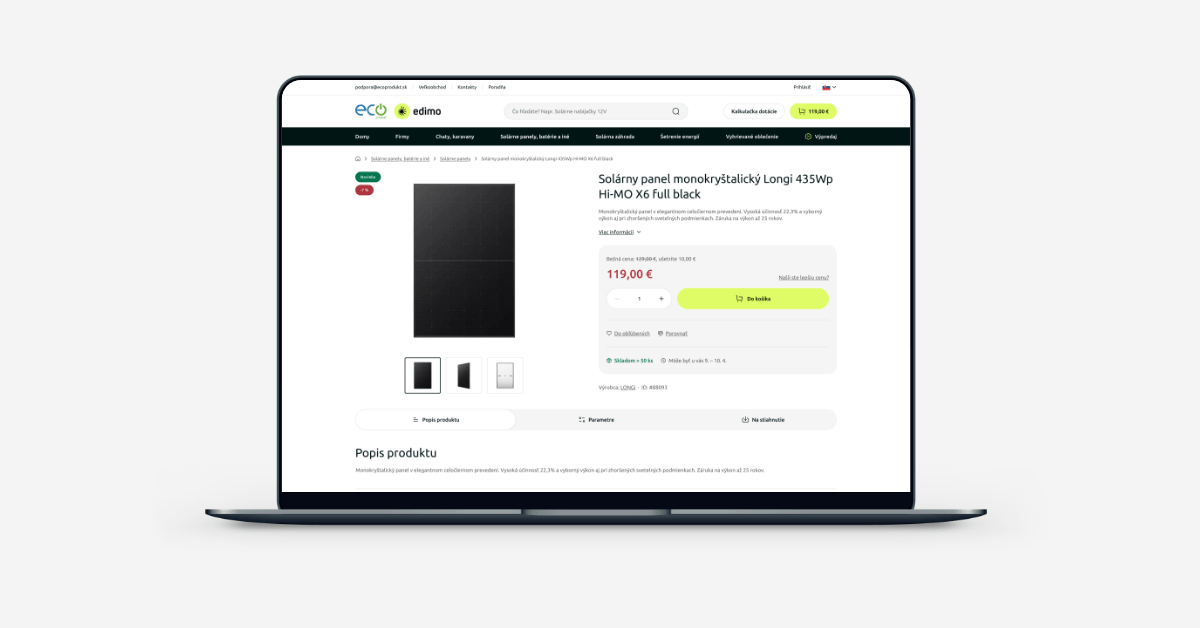
Everyone talks about conversion, yet you can boost profitability without winning a single new customer. Just look at how much manual work sits behind every order, customer claim or product listing. That is why I always look beyond the online store to the entire flow of information, from the customer through the order, warehouse and invoicing all the way to delivery. Sometimes the best investment in an online store is a change to a system outside it. For Ecoprodukt, we rolled out Odoo ERP alongside a new online store, and the client estimates that each employee now saves around 1–2 hours a day.

We might find that the best investment is a new ERP, warehouse automation or a custom app. I would decide based on what delivers the biggest business impact. And I would set aside part of the budget for experiments. AI is evolving so fast that I would rather not spend everything today on a solution we may be able to build far more efficiently a year from now.
In short, I would invest in a more efficient company, not automatically in a new online store.
Case Study
Ecoprodukt: A New Online Store Connected to Odoo ERP
Over 21,200 orders, 240 B2B partners and 1–2 hours saved per employee every day.
Thank you to Mišo Kráľ and the E-commerce Slovakia team for the invitation, to Vladimír and Ján for a great discussion and to everyone who stayed for the mastermind session. If you are weighing similar decisions for your online store, let’s talk.