

Manipulative design practices, also known as dark patterns, are unfortunately more common in e-commerce than we’d like to believe. Many online stores try to steer customer decisions using false information, artificial urgency, or misleading descriptions. While these tactics may offer a short-term sales boost, they ultimately erode customer trust and damage your brand’s reputation.
Dark patterns under the microscope
Although the European Union’s Digital Services Act (DSA) explicitly prohibits manipulative design elements, they still appear on major platforms. A German consumer protection group revealed that even giants like Amazon, TikTok, and Temu make use of these tactics.
These practices intentionally influence user behavior, pushing people toward impulsive decisions and discouraging thoughtful purchases. The numbers speak for themselves — according to surveys, 97% of online shoppers have encountered manipulative elements. The most common include fake stock alerts, high-pressure countdowns, and hidden fees revealed only at the final checkout step.
Not all gamification is created equal
Not every technique that influences customer behavior is unethical. Gamification, when used transparently and with good intent, can improve user experience and encourage positive engagement. Loyalty programs and activity-based rewards motivate customers naturally — without pressure or deceit.
The issue arises when game-like elements are misused to deceive. If an e-commerce store creates fake urgency or manipulates information about product availability, it leads to subconscious pressure and impulsive buying. Let’s look at five common manipulative techniques to avoid:
1. Fake interest notifications
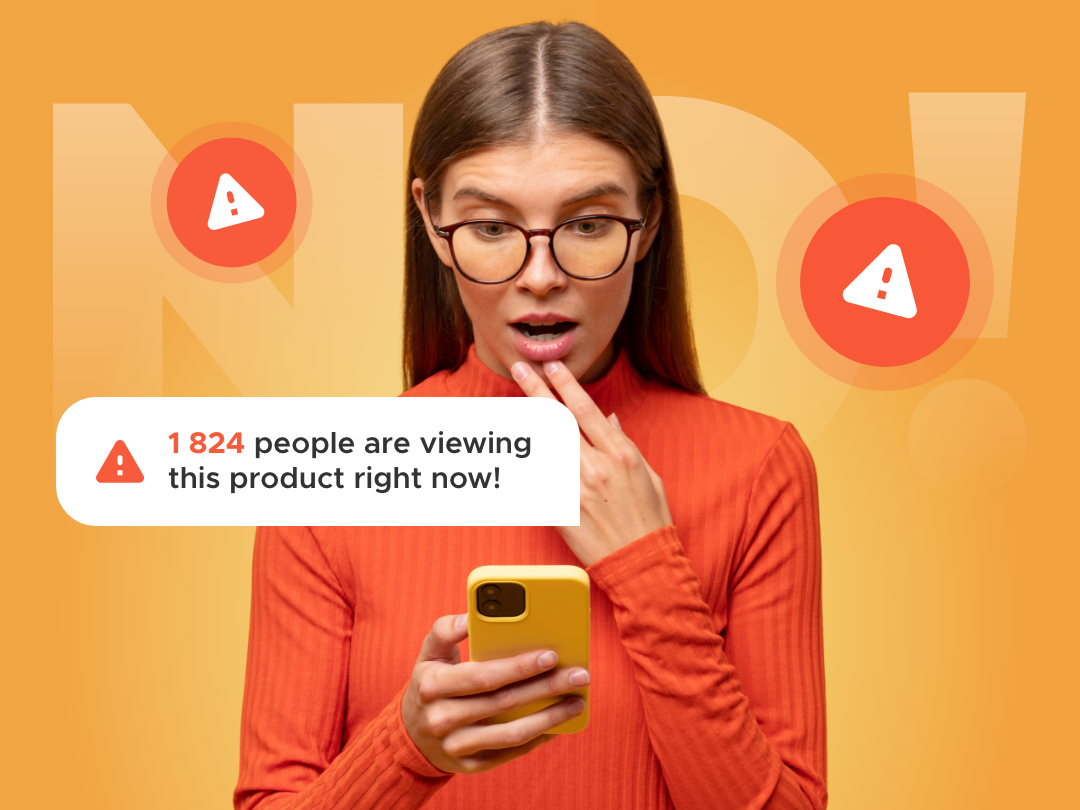
We’ve all seen messages like “128 people are viewing this item” or “Only 5 left in stock!” — but in many cases, these numbers are randomly generated with no basis in reality. The goal? To create urgency and push customers into quick decisions. Not only is this unethical, but in countries like Germany and France, it’s already illegal.
2. Misleading discounts and fake prices
A common trick is inflating the original price to make a discount look more attractive. For instance, a product normally sold for €50 might be advertised before the holidays as marked down from €100 — even though its real price was never that high. The result? A fake deal that plays on perception, not actual savings.
3. Forced registration and hidden fees
Some shops require customers to register before completing a purchase, forcing account creation. Another common dark pattern? Hidden fees that appear at the last step — for example, charges for “express processing” or “handling” that weren’t mentioned at the start of the purchase journey.
4. Automatic subscriptions without clear consent
Some platforms make it seem like the user is purchasing a one-time product or service, only to enroll them in a recurring subscription. These setups often include confusing cancellation processes that make it intentionally hard for users to unsubscribe.
5. Psychological pressure through countdowns and fake urgency
Many websites use countdown timers to create a sense of urgency — like “This sale ends in 2 hours!” But if you return the next day, the timer starts again. This tactic targets impulsive behavior and discourages thoughtful decision-making.
How to do it right?
If you want to build long-term trust, focus on transparency. Display accurate stock levels, offer honest pricing, and give customers the freedom to purchase without pressure.
Remember – trust takes years to build, but only seconds to lose.
Sources
- Digital Services Act (DSA) and regulations for large platforms: https://digital-strategy.ec.europa.eu/en/policies/dsa-vlops
- VZBV report on manipulative practices in e-commerce: https://www.vzbv.de/pressemitteilungen/von-amazon-ueber-tiktok-bis-temu-manipulative-designs-bleiben-ein-problem
- More on dark patterns and user impact: https://www.darkpatterns.org/
- Ecommerce Bridge article on dark patterns in online shopping: https://www.ecommercebridge.sk/ovplyvnovanie-nakupnych-rozhodnuti-cez-dark-patterns-je-bezna-prax-vo-vyskume-neobstala-ani-jedna-platforma/
FAQ: Dark patterns in e-commerce
What are dark patterns?
Dark patterns are manipulative design elements intended to influence users unethically—by creating false urgency, hiding important information, or presenting misleading offers.
Are these practices legal?
Many dark patterns are banned under the Digital Services Act (DSA), especially for large platforms. Some EU countries also have additional laws addressing these issues.
Is gamification a dark pattern?
Not necessarily. If used transparently to encourage positive behavior (like loyalty programs), gamification can be a good thing. It becomes problematic when used to deceive or pressure customers.
What are examples of fake urgency?
Messages like “Only 5 left!” or countdown timers that reset every visit. These are meant to create stress and rush the customer into buying.
Why are hidden fees a problem?
If fees appear only at the final step of checkout, it breaks trust. Transparent pricing builds confidence and reduces cart abandonment.
How do I spot fake discounts?
Fake discounts often use inflated “original” prices that never actually existed. If a deal looks too good to be true, check the product’s price history.
Is it legal to enroll users in subscriptions automatically?
No—not without clear and informed consent. Hidden or hard-to-cancel subscriptions can be considered deceptive under EU regulations.
What can I do if I encounter a dark pattern?
You can contact customer support, file a complaint with a consumer protection office, or report it to the relevant EU authority under the DSA framework.
How can an e-shop build trust without manipulation?
By being transparent: show real product availability, clear pricing, honest communication—and give customers the space to make their own decisions.